









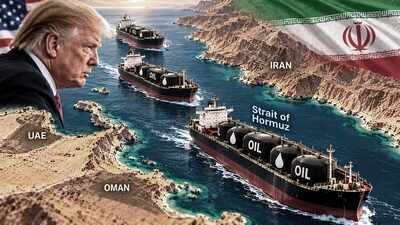
When the US-Iran war began at the end of February, it unleashed an energy crisis on the world and one not seen in recent years. Oil shipments through the Strait of Hormuz, de facto controlled by Iran, came to a standstill, crude oil prices shot up, and the world was left grappling with a supply crunch.The US war with Iran exposed Tehran’s ability to disrupt the global economy by blocking the Strait of Hormuz. Before the war, around 19 million barrels of crude oil were exported daily from the Middle East.However, September data from tanker-tracking firm Kpler showed oil flows recovering to an average of 16 million barrels per day, the highest since the conflict began.
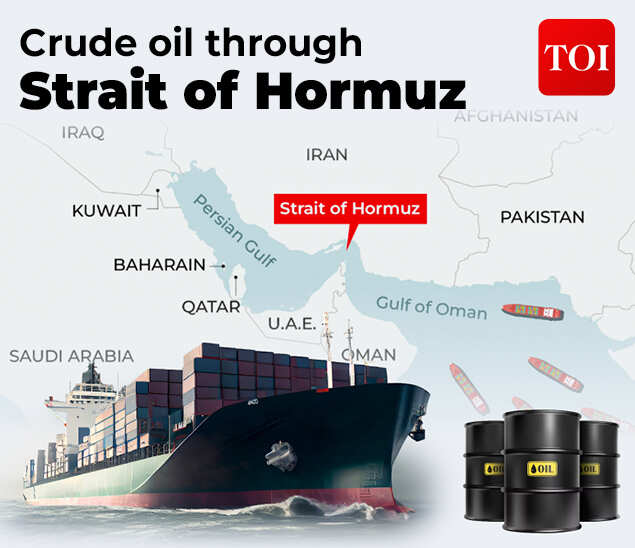
Crude oil through Strait of Hormuz
Of this, around 10 million barrels passed through the Strait of Hormuz, while another 6 million barrels moved through pipelines and ports on the Red Sea and Gulf of Oman that bypass the strait.But a deal between the US and Iran is still elusive. Does that mean that Iran has lost the hold it had over the Strait of Hormuz? How sustainable are the oil flows through Hormuz and what does the increased supply mean for India? And importantly, if supply is normalizing, then why are prices of oil not coming down?
Hormuz grip: Is Iran losing leverage?
Export volumes exceeded pre-war levels on 14 days during September. The figures covered oil shipped through the Strait of Hormuz, supplies routed via the Red Sea, as well as crude loaded at terminals and transferred between vessels in the Gulf of Oman.Kpler data shows more oil flowing through Hormuz against the spring and summer trough. But, it also suggests that flows are slipping again in October.Gulf crude exports recovered to 14.1 mb/d in September from 9.8 mb/d in August (+4.3 mb/d m/m), about 78% of February’s 18.2 mb/d, though this includes bypass loadings at Yanbu and Fujairah, according to Naveen Das, Senior Analyst at Kpler.“Kpler’s crossing data show crude through the strait down 27% from a wartime high to at least 10.1 mb/d, and my tally of Strait of Hormuz feed shows laden exits falling from about 11.0 mb/d (1-7 Oct) to 6.2 mb/d (8-12 Oct),” Naveen Das tells TOI.But, in an analysis, Kpler has actually said that normalisation of flows via Hormuz no longer needs a deal. Kpler’s base case instead reflects slower, uneven normalisation under continued conflict, with shipping recovering through operational adaptation rather than following a single diplomatic trigger. “Washington appears willing to sustain economic pressure while facilitating shipping,” Kpler has said in a recent report.
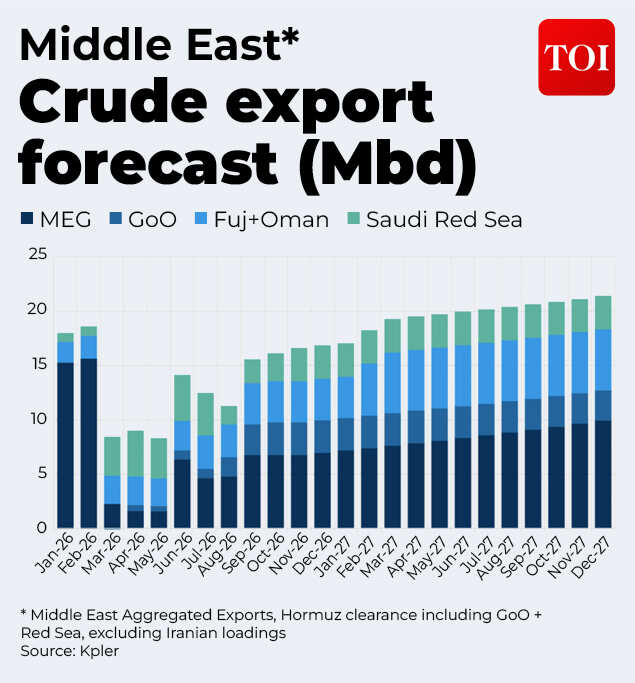
Kpler’s Middle East Crude export forecast
According to an NYT article, the recovery in oil flows suggests the US has reduced Iran’s control over the waterway, but it has come at a high cost.Costs are several times higher: VLCCs loading at Fujairah, Yanbu or Muscat are fixing at 750-950 WS against 125-155 quoted for Gulf loadings in February. War-risk premiums are quoted at 3-8% of hull value, against about 0.25% pre-war.Also, Iran continues to attack ships almost daily, yet more tankers are now willing to risk the crossing. The US military has been providing air protection, while Saudi Arabia and the UAE have increased payments to tanker operators, with fees in some cases reaching ten times pre-war levels, the NYT report said.Iran is under growing economic pressure, with years of sanctions compounded by the war. Its own seaborne oil exports have fallen to zero under the US blockade, according to Kpler.However, as per NYT analysis Iran’s broader strategy of keeping oil prices high enough to pressure the US and the global economy remains effective.Iran also retains other options if it comes under greater pressure. Its allies, the Houthis in Yemen, control the Bab al-Mandab Strait, another important shipping route. Tehran could also target Gulf energy infrastructure.What needs to be understood is that even though Iran’s grip on Hormuz may be weakening as oil shipments resume, its ability to keep energy costs high and threaten other critical routes means its leverage over the US has not disappeared.And the threat is not yet over.According to Kpler data, last week saw the most tanker attacks of any week of the war, and only seven commodity vessels crossed on October 6th, the fewest since July 23, against about 125 a day pre-war. At least six vessels have been hit since September 28, and Saudi Arabia’s East-West pipeline was shut after the 10-11 September attacks and is only about half restored.
Why are crude oil prices not coming down?
Despite the increase in oil flows, prices have not fallen significantly. Higher tanker fees and insurance premiums continue to make shipments expensive, while global supplies remain insufficient to meet demand. China and other countries are also drawing down the reserves that helped cushion the initial disruption, and approaching winter is expected to increase demand for heating fuel.
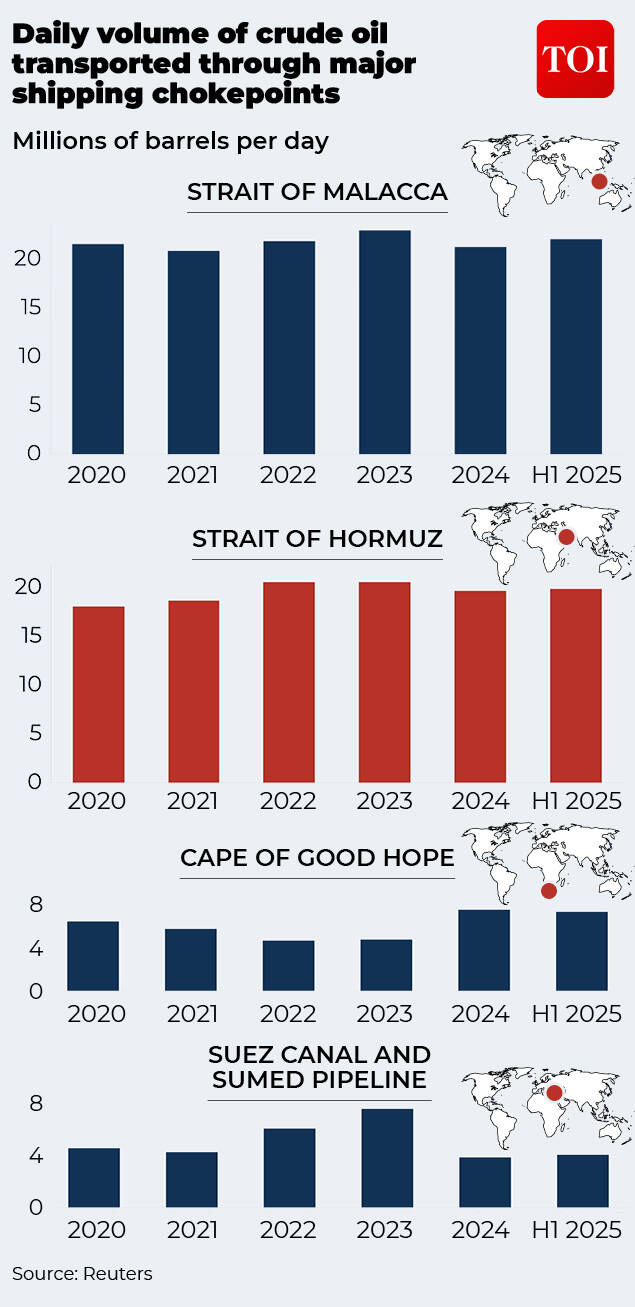
Oil choke points around the world
Several factors are contributing to the persistently high crude oil prices, the biggest among them being the uncertainty surrounding the transit of oil and the future of war.“A combination of unsustainable flows, the threat of attacks and the need to access crude oil promptly before high freight rates dent refinery margins are keeping prices elevated for now. All of these factors are difficult to resolve, which is why the baseline oil price is remaining elevated,” explains Naveen Das.The market is not going by the increase in the number of barrels that are loaded and transiting. It is pricing in the risks related to the reliability and usability of supply.
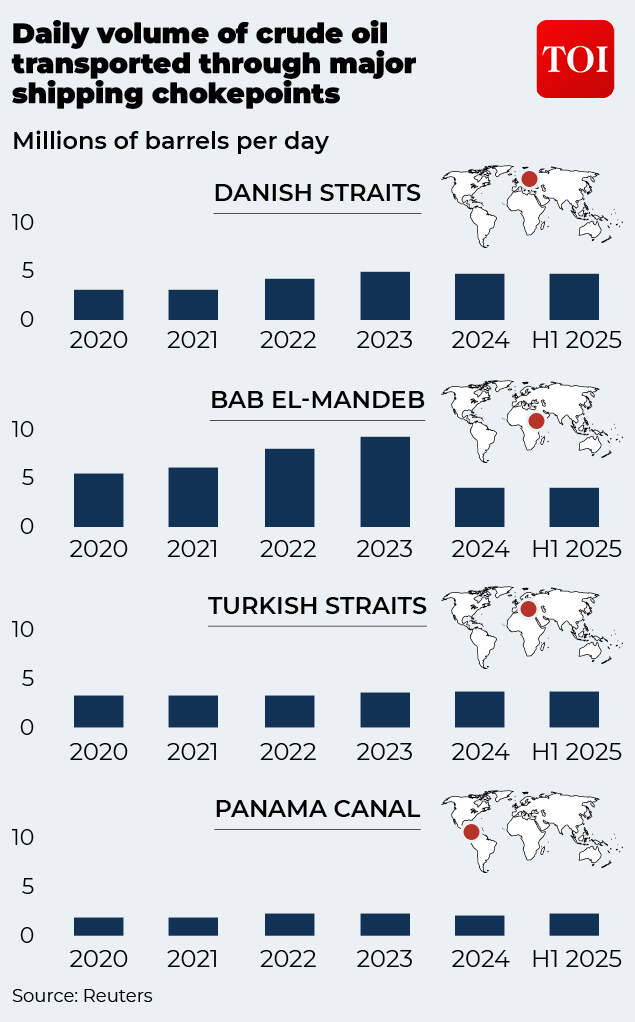
More Oil choke points around the world
While recovering exports may have eased the physical shortage, they have not removed the underlying delivery risk, high freight costs, refinery constraints or even the depleted inventories.Praveen Rai, Director, Grant Thornton Bharat lists four key reasons for oil prices remaining high:First, the risk of renewed interruption remains embedded in prices. A cargo loaded today does not guarantee that the next shipment will move safely or arrive on schedule.Second, logistics remain exceptionally expensive. Industry shipping estimates indicate that Middle East-to-Asia very large crude carrier rates recently exceeded $1.2 million per day, compared with roughly $30,000 in January, and that freight represented about 27% of the delivered value of a barrel on the observed route, compared with about 3% previously.Third, the constraint extends beyond crude availability. The International Energy Agency reports that global diesel exports in September were approximately 700,000 barrels per day below the previous year, as a 1.3 million barrel-per-day loss from Russia and the Middle East was only partly offset by other suppliers. Global observed oil inventories were also 509 million barrels below end-February levels. This means the market has fewer product and inventory buffers even as crude loadings recover.Finally, crude quality and refinery availability matter. More crude exports do not automatically translate into more diesel, particularly when medium-sour grades and refinery capacity are constrained.“Durable price relief will require safer passage, lower freight and insurance costs, improved refinery operations and a recovery in inventories, alongside higher supply,” Rai says.
What it means for India
Before the start of the conflict, oil from the Middle East made up a big part of India’s crude imports. In fact, not just crude, India’s dependency on the Middle East for LPG and LNG imports was also high.So, easing of supplies through the Hormuz carries significant implications for India, especially at a time when alternative barrels from Russia become more expensive in the face of competition for oil procurement from China.According to Naveen Das, India has kept total imports at about 5.0-5.3 million barrels per day and swapped origins, buying wherever risk-adjusted landed cost is lowest.“Russia rose from 1.08 mb/d in February to a 2.73 mb/d peak in July, then eased to 1.87 mb/d in September (-12% m/m). The Gulf-origin share fell from about 59% in February to about 18% in June and is back to about 37% in September,” he notes.
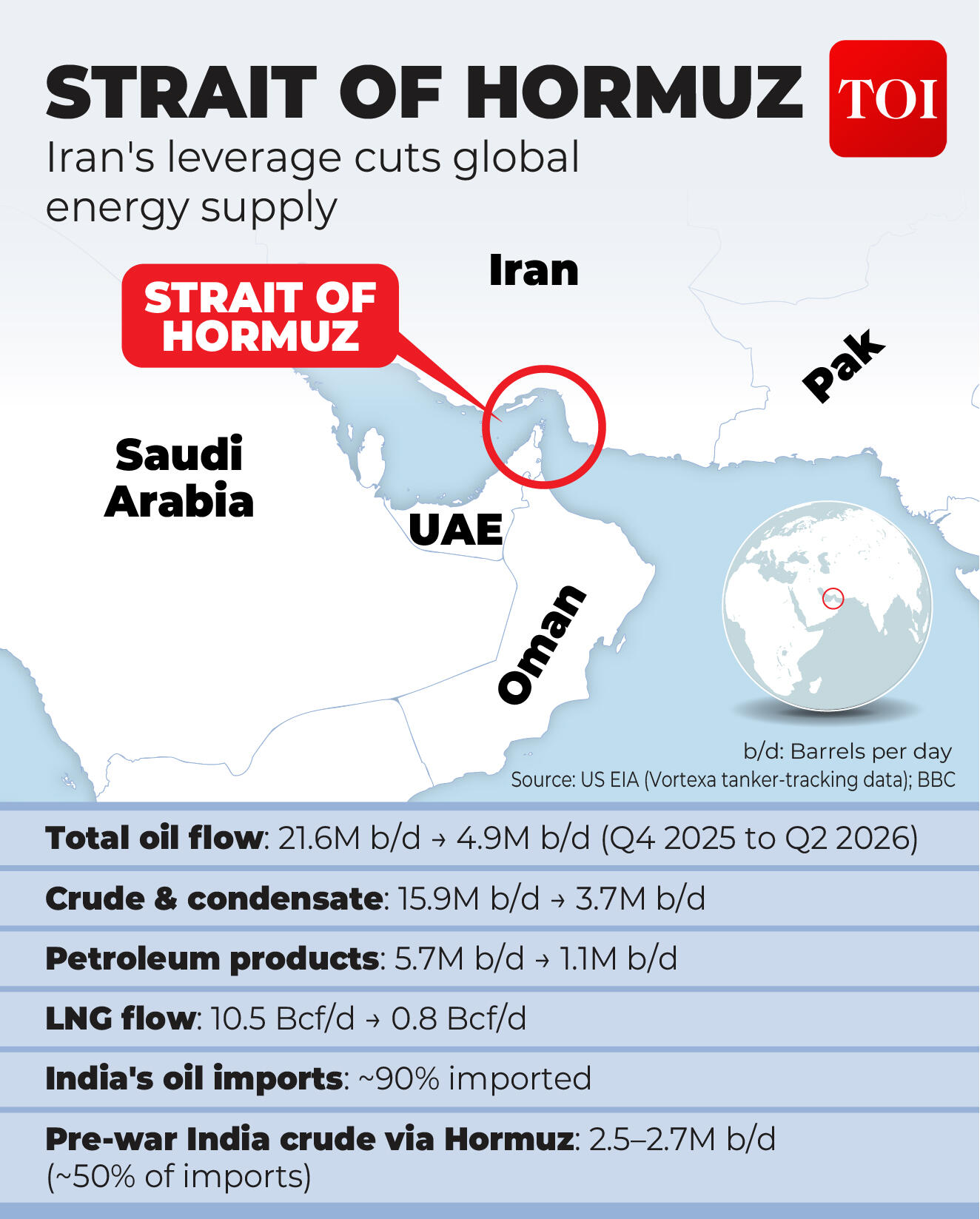
Importance of Strait of Hormuz in numbers
“Iraq plus Kuwait rose from 0.32 mb/d in August to 0.86 mb/d in September, so India is again exposed to inside-strait barrels, not just bypass volumes. Venezuela is a new 0.2-0.35 mb/d supplier since April,” he adds.Praveen Rai believes that the improved Gulf availability has given Indian refiners greater access to medium-sour grades suited to producing diesel and other middle distillates.“Supplier-arranged shuttle and ship-to-ship transfers can reduce a buyer’s direct exposure to the highest-risk leg, but the allocation of freight, insurance and transit risk depends on the commercial terms of each cargo,” he says.India’s strategy remains optionality: a wider pool of available suppliers improves substitution and refinery planning.“The limitation is that supplier diversification is not necessarily route diversification, since several Gulf suppliers remain exposed to the same chokepoint. However, India remains committed to securing for itself the best mix of crude considering various geopolitical factors and market and national imperatives,” Rai tells TOI.So while India is managing to procure crude via its diversified crude basket, the risk of flows via Hormuz continues, and whatever is coming is being bought at high rates, which ultimately continues to exert pressure on inflation and the economy.