










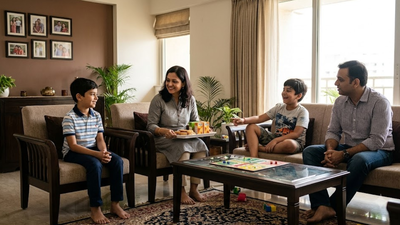
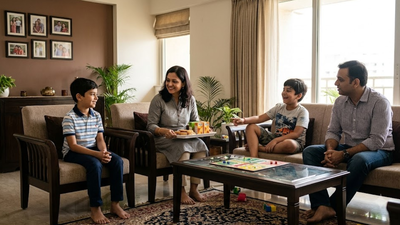
A child who is talkative and playful at home may suddenly become quiet when visiting a friend’s house. Others may use unusually polite language around a friend’s parents, avoid making jokes they would normally make, or keep checking their friend’s reaction before answering an adult’s question. Parents may wonder why their child seems like a different person around other families. Is the child uncomfortable? Are they trying to impress someone? Or do they simply behave differently when their own parents are not around?Sometimes, children are learning how to adjust to different social settings. The way they behave around a friend’s parents may reflect their understanding of what is expected of them, how they want to be perceived and how comfortable they feel in that environment.
22 Sept 2026 | 15:04
What pregnancy purchase turned out to be genuinely useful?
Children learn that different people expect different behaviour
A child may be encouraged to speak freely at home but expected to be more formal around elders. At a friend’s house, they may have to work out how much joking is acceptable, whether they can ask for something directly or how to respond when another parent corrects them. Research on children’s language styles examined how children communicate differently with different people. Its examples describe how a four-year-old might whine with their mother, engage in elaborate verbal play with peers and use a different conversational style with adults.Although this research focuses on communication rather than behaviour around a friend’s parents specifically, it illustrates an important point: children can adjust how they speak and interact according to whom they are with. A child who becomes quieter around a friend’s parents may not be hiding their personality. They may simply be trying to understand the social rules of a setting in which they are less familiar.
They may be trying to make a good impression

Photo: Canva
A visit to a friend’s home can bring together two relationships that matter to a child: their friendship and their relationship with the friend’s family. They may want the friend’s parents to like them, while also wanting their friend to see them as confident, funny or independent. These aims can sometimes pull in different directions. For example, a child may want to make a joke but hold back because they are unsure whether the friend’s parents will find it disrespectful. Another may agree to a suggestion they do not particularly like because they do not want to appear difficult in front of the family. A study published in 2023, examined how adolescents regulate the expression of their emotions in different social contexts. The researchers explored whether young people suppress their feelings differently around peers and parents, and how closeness to others relates to this behaviour.The findings offer useful context for understanding why a young person may not express themselves in the same way with everyone. However, they do not establish that children behave differently around a friend’s parents for this reason. For some children, the change may be a simple effort to avoid embarrassment or fit into an unfamiliar social situation.
A child may also be watching their friend’s reaction
Children do not learn social rules only from adults. They also pay attention to how their friends behave and respond to one another. Imagine a child visiting a friend’s home for the first time. They may notice that their friend speaks very formally to their parents, asks permission before taking food or avoids certain subjects at the dinner table. The visiting child may begin following the same pattern, even if these rules are different from those in their own home.Research on relationships between adolescents and their friends suggests that these social worlds influence one another. A [five-wave longitudinal study followed 912 adolescents and examined links between their relationships with parents and friends. It found associations over time in how young people perceived support, negative interactions and power in these relationships. The study did not examine visits to friends’ homes, but it highlights how family relationships and friendships can be connected as children grow older.
When should parents pay attention?
A change in behaviour is not necessarily a warning sign. Being polite around adults, taking time to warm up or following a friend’s household rules can be part of learning to navigate social situations. The more useful question is whether the child seems comfortable with the adjustment or feels compelled to act differently to avoid disapproval. Parents can look for patterns. Does the child become quiet only during the first few minutes of a visit, then relax? Do they seem happy and comfortable once they start playing? Or do they remain tense, repeatedly seek reassurance or appear afraid of saying the wrong thing?It also helps to consider the setting. A child may be relaxed with one friend’s family but reserved with another. That difference can reflect familiarity, the adults’ communication style or the child’s experience of being welcomed. Rather than asking, “Why are you so different at their house?”, parents can start with a less judgmental question: “You seemed a little quiet when we were there. How did you feel?” Other useful questions include, “Do you feel comfortable at their house?” and “Are there things you find difficult when you’re around their parents?” These questions give children room to explain their experience without suggesting that they have done something wrong.Children need opportunities to learn that different settings call for different behaviour. They can be respectful guests without agreeing with everything, and they can be polite without hiding every part of their personality. Parents can explain simple social expectations before a visit, such as greeting the adults, asking before taking something and respecting household rules. At the same time, they should make it clear that their child can speak up if something makes them uncomfortable.