






Navratri is just around the corner, and for many people, this is when the festive season really starts.The mornings can be quite different during these nine days. There may be a diya burning in the puja room, prayers being said at home and a vrat meal being planned for later in the day. And then, come evening, things can get a lot more lively. Garba music, dandiya nights and people dressed in their festive best become part of the scene.Sharad Navratri, also known as Shardiya Navratri, is dedicated to Goddess Durga and her nine forms. It is observed for nine days, after which Vijayadashami, or Dussehra, is celebrated on the tenth day.If you’re observing Navratri this year, or simply want to know when the celebrations begin, here’s a look at the dates, rituals and traditions associated with it.
When does Navratri start in 2026?
Sharad Navratri begins on Sunday, October 11, 2026, and ends on October 19. Dussehra will be celebrated on October 20.The first day of Navratri falls on Shukla Pratipada in the Hindu month of Ashwin.In New Delhi, the Pratipada tithi begins at 9:19 pm on October 10 and ends at 9:30 pm on October 11.October 11 is also when devotees following the tradition perform Ghatasthapana, or Kalash Sthapana. It marks the start of Navratri puja.
Why is Navratri celebrated?
- The festival is closely associated with the story of Goddess Durga and Mahishasura.
- According to Hindu mythology, Durga fought Mahishasura and defeated him after a long battle. Her victory is seen as the victory of good over evil, which is why the story holds such an important place in Navratri celebrations.
- The celebrations then move towards Vijayadashami. The tenth day is also linked to Lord Rama’s victory over Ravana and is observed as Dussehra in many parts of the country.
- But there isn’t really one way to celebrate Navratri.
- In Gujarat, the nights are filled with garba and dandiya. In West Bengal, Durga Puja becomes the centre of attention, with large pandals and community celebrations. In many North Indian homes, people observe vrat, perform puja and prepare for Kanya Puja.
- The traditions may look different, but Goddess Durga remains at the centre.
What is Ghatasthapana?
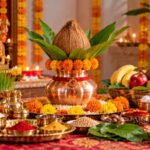
For families performing Navratri puja at home, Ghatasthapana is one of the first important rituals.It is also known as Kalash Sthapana. A kalash is placed in the puja area and worshipped through the nine days. Barley seeds are often sown beside it and allowed to grow during Navratri.The puja doesn’t have to mean setting up an elaborate arrangement. Families may light a diya, offer flowers and fruits, prepare bhog and recite prayers or mantras.Some devotees also read the Durga Saptashati, or Devi Mahatmya, during the nine days.The muhurat for Ghatasthapana depends on where you live. So if you’re planning to perform it at home, check the local panchang for the timing in your city rather than following a time meant for another location.
Is fasting compulsory during Navratri?
No.Fasting is an important part of Navratri for many devotees, but everyone doesn’t follow the same routine.Some people keep a vrat throughout the nine days. Some fast only on certain days. Others have one meal during the day and avoid particular foods.And then there’s the familiar Navratri food.Sabudana, kuttu, sama rice, makhana, potatoes, fruits and dairy products are commonly eaten during a vrat. Sendha namak is generally used instead of regular salt.But even this can vary. Families often have their own vrat recipes and food habits, while regional traditions can be different too.So don’t be surprised if one person’s Navratri thali looks nothing like another person’s.Those who are fasting generally follow the rules they have grown up with or those followed in their family tradition.
What are the nine forms of Goddess Durga?
Each of the nine days is dedicated to a different form of Goddess Durga.They are Shailputri, Brahmacharini, Chandraghanta, Kushmanda, Skandamata, Katyayani, Kalaratri, Mahagauri and Siddhidatri.Devotees worship the form associated with each day and offer prayers, flowers, bhog and other items as part of the daily puja.The final days of Navratri are particularly significant in many homes. Durga Ashtami and Maha Navami are observed with special prayers, and some families also perform Homa and other rituals.
What is Kanya Puja?
Kanya Puja is another Navratri tradition, especially common in North India.You may have seen young girls dressed up and invited into homes during the festival. They are worshipped as manifestations of the Goddess.In many households, their feet are washed before they are served food. They may also be given a small gift or some money after the meal.The food prepared for them generally follows the family’s Navratri food traditions.Even the day of Kanya Puja can differ. Some families perform it on Ashtami, while others do it on Navami.
Why do people celebrate garba during Navratri?
And then there is garba, which has become almost inseparable from Navratri celebrations in many parts of India.In Gujarat, the evenings can stretch late into the night, with people gathering in large numbers to dance. Traditional outfits, colourful jewellery and dandiya sticks are all part of the scene.The same festive energy can now be seen in cities far beyond Gujarat too. Large garba and dandiya events are held across India, attracting people who come to dance, meet friends and simply enjoy the festive mood.For some people, garba is a major part of their Navratri experience. For others, it isn’t part of their celebrations at all.A family may spend the morning doing puja and the rest of the day observing a vrat. Another may visit a temple and then head out for garba in the evening. Some may keep the celebrations completely at home and focus on Ashtami, Navami and Kanya Puja.That’s the thing about Navratri. The same festival can look quite different depending on the family, region and traditions you grew up with.There are homes where the nine days are quiet and prayerful. There are others where the evenings are all about music, dancing and getting dressed up.Even the food isn’t the same everywhere.But underneath all these differences is the same central belief. Navratri honours Goddess Durga and celebrates the victory of good over evil.Once the nine days end on October 19, Vijayadashami will be celebrated on October 20.For some, that will mean Dussehra puja and celebrations. For others, it will simply be the next stop in what is usually a very busy festive season.