










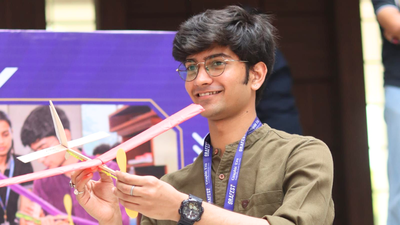
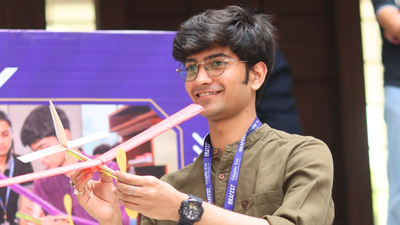
Meet Subrat Shandilya: Young Aerospace engineer from Bihar who is building a low-cost indigenous jet engine, will get seed funding from the governmentAs a child, Subrat Shandilya was given a toy aeroplane to play with. He did not spend much time simply flying it around. Instead, he was more interested in how it was made and how its mechanism worked. Years later, that curiosity has taken the Nalanda youngster into aerospace engineering. Today, Shandilya is working on a 2-kilonewton-class compact jet engine that he hopes can offer a lower-cost propulsion option for unmanned aerial vehicles (UAVs) and other aerospace platforms.His startup, Shandilya Aerospace, also made a presentation in Patna on Monday. According to Navbharat Times and media reports, the Bihar government has approved the project, opening the way for phased financial support.For Shandilya, however, the jet engine project did not begin with that presentation. It began much earlier, with an interest in understanding how aircraft work.
Who is Subrat Shandilya?
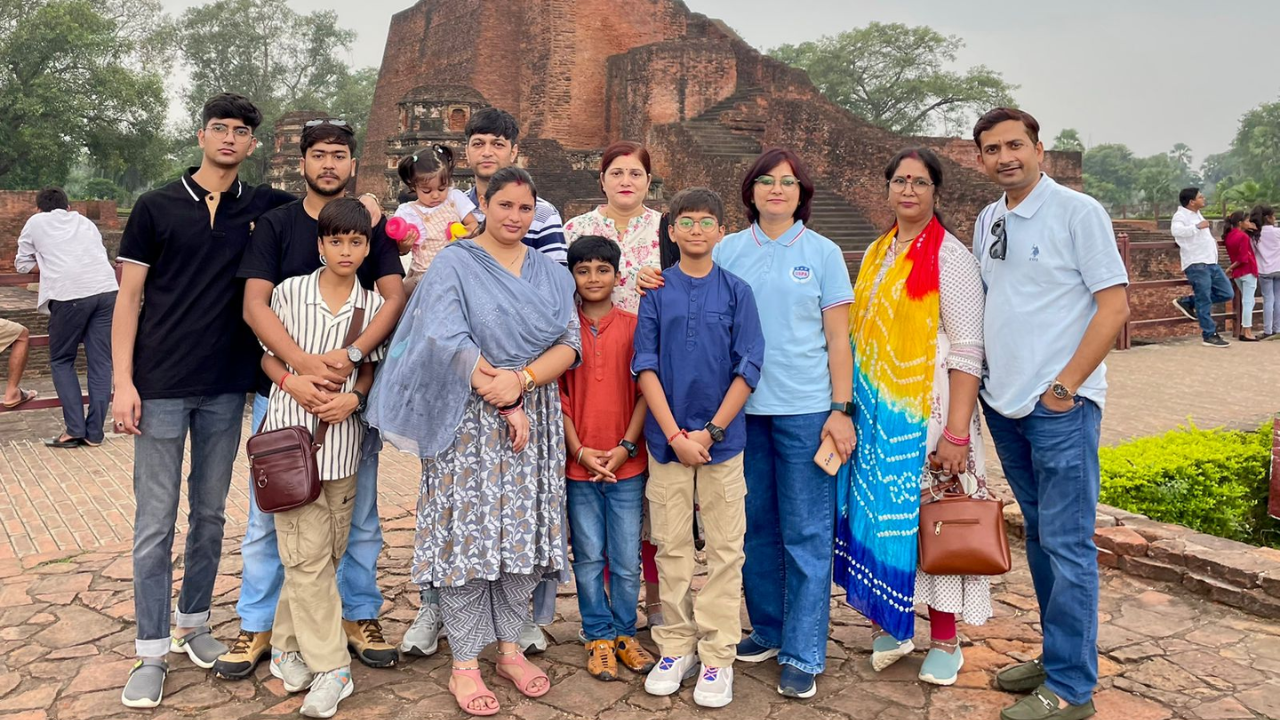
Subrat Shandilya with his family. (Photo credit: ETV Bharat)
Shandilya is originally from Kulti Jiyar village in the Nalanda district of Bihar. According to ETV Bharat and various media, his father, Sanjeev Mukesh, and mother Meenakshi work with the Indira Gandhi National Open University (IGNOU). Shandilya is the elder of two brothers; his younger brother Sarthak Shandilya is currently completing his schooling in Delhi.His family says his interest in aircraft was visible from a very young age. His father recalled about when Subrat was small, he was given a toy aeroplane. Rather than treating it simply as a toy, he spent time examining its construction and trying to understand its mechanism.
A student who stayed focused on aircraft
Shandilya completed his early and secondary education in Patna and Delhi through the CBSE system. According to his family, he was among the top performers at school and topped his school in Class 10 in 2018. He completed his intermediate examination in 2022. In 2023, he joined Graphic Era Deemed University, in Dehradun to study aerospace engineering.It was during his engineering years that his interest moved from learning about aircraft to actually designing them. Shandilya began working on UAV and aircraft designs while he was still a student. He has since worked on UAV designs for international clients and users, according to the reports.One of the important milestones in that early work came through the DARPA (Defense Advanced Research Projects Agency) A Lift Challenge USA. More than 500 applications were submitted in the initial phase, and Shandilya’s aircraft concept was among the 72 designs selected for the next stage. That experience in aircraft design eventually pushed him towards a much harder engineering problem: propulsion.
Why is Shandilya developing a compact jet engine?
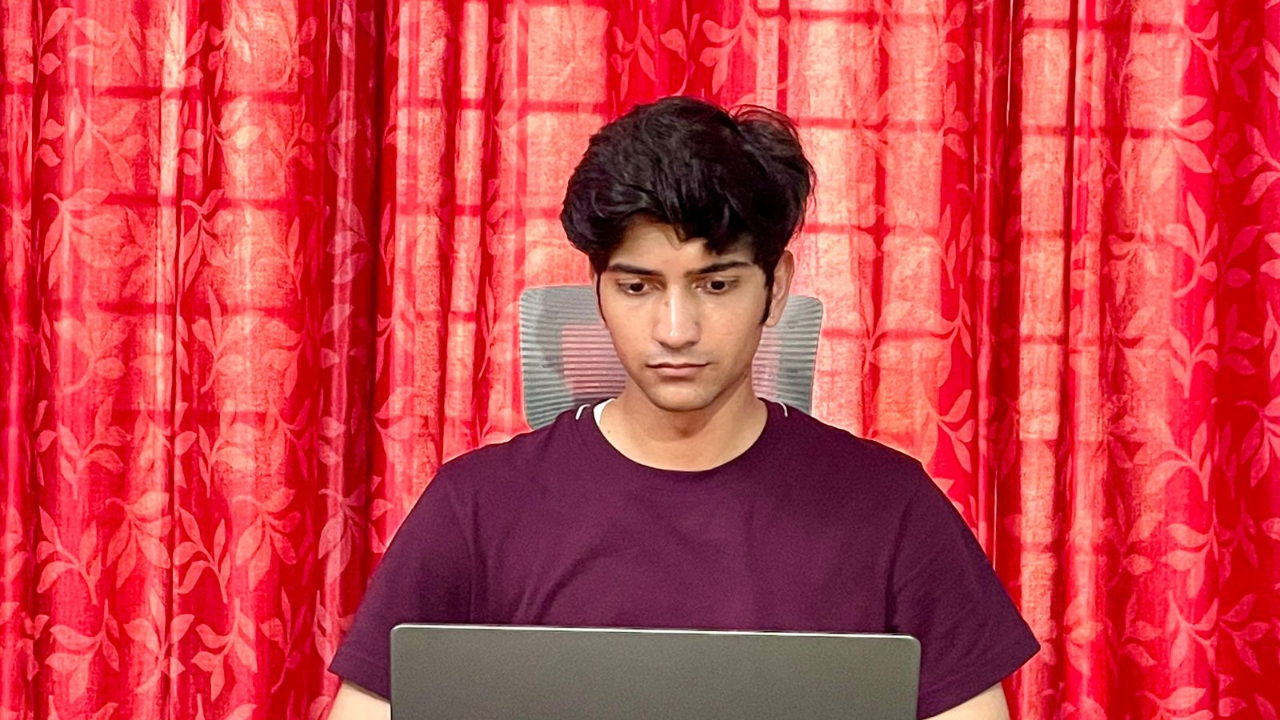
Shandilya’s team is exploring the technology for rapid prototype development, quicker design changes and potentially more efficient future production. (Photo credit: ETV Bharat)
Shandilya is now concentrating on a compact jet engine of around 2 kN thrust. The intended applications include UAVs, drones and other aerospace platforms, according to various media reports. The basic idea behind his project is to question whether every aerospace mission needs an engine built around the same requirements. Shandilya argues that conventional small jet engines can become expensive because they require high-quality materials, complex manufacturing processes, precision machining and stringent long-term durability requirements.His approach is to design the propulsion system around the specific mission. In other words, instead of treating every application as though it needs an engine designed for very long operating periods and demanding durability requirements, his company is looking at how the engine’s design and manufacturing requirements can be matched to what the particular mission actually needs.The aim is to make compact jet propulsion less expensive and easier to manufacture, while retaining the performance required for its intended use.
The role of metal 3D printing
One of the most important parts of the project is metal additive manufacturing, commonly known as metal 3D printing. Shandilya Aerospace is treating the technology as a major part of its manufacturing strategy. The reason is fairly practical. Jet-engine components can have complicated shapes and can require several stages of conventional manufacturing. Metal 3D printing can potentially allow some complex components to be produced through fewer manufacturing steps. According to ETV Bharat, Shandilya’s team is exploring the technology for rapid prototype development, quicker design changes and potentially more efficient future production.Shandilya Aerospace is currently working on design and engineering as well as building its prototype manufacturing and testing capability. The company is developing the engine; it is not yet a mass-produced commercial product. The next major step is to manufacture the prototype and establish whether the design works as intended through testing.
Bihar government approves the project
The project received a significant push after Shandilya Aerospace’s presentation in Patna. Bihar government’s industry department approved the compact jet-engine project under the Bihar Startup Policy-2022 and agreed to provide seed funding. The project can receive government assistance in stages.According to Navbharat Times, ₹10 lakh in seed funding is to be provided initially. Once the prototype is completed and successfully tested, the project can receive another ₹25 lakh, followed by assistance of up to ₹50 lakh at the next stage. The total potential support across the stages is therefore ₹85 lakh.
A factory near Rajgir is part of the plan
There is a bigger plan if the prototype succeeds. Shandilya’s father, Sanjeev Mukesh, told Navbharat Times that the family is planning to establish a jet-engine manufacturing facility around Rajgir if the prototype development and testing are successful. If those stages are completed successfully, the project could then move towards larger-scale production.
He is also chasing a speed record
The jet-engine project is only one of Shandilya’s aerospace ambitions. He is also leading Beyond Mach, an aerospace project working on a high-speed RC aircraft. According to Navbharat Times, the team is targeting a speed of more than 150 metres per second, or about 540 kmph.The team is aiming to beat a reported Guinness World Record in the category. According to various media reports, German pilot Bruno Stöckli-Jürgensen achieved 492.375 kmph with his self-built aircraft ‘Silensium’ at Ballenstedt, Germany, on June 12, 2023. Shandilya’s team is working to go beyond that figure.