












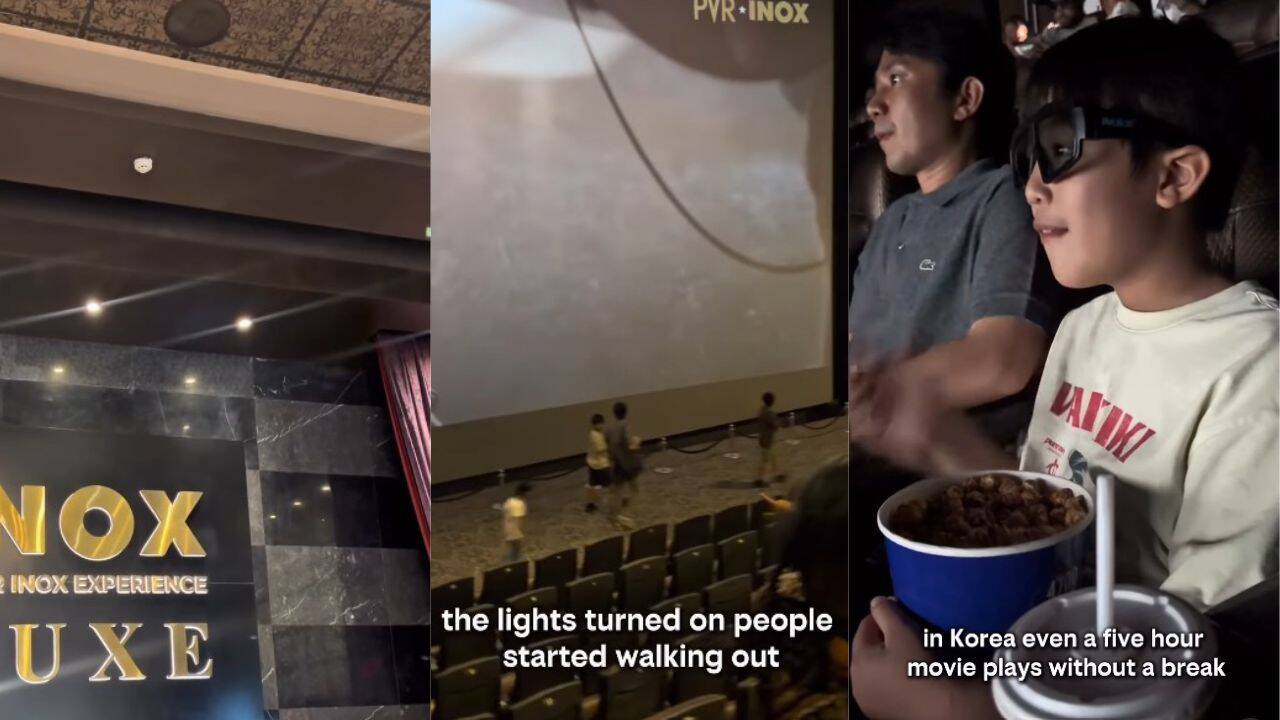
For Jung ae Um, a South Korean woman living in India with her kids, a trip to an Indian movie theatre was no different. The entrance, ticket counter, popcorn and movie posters, everything looked remarkably similar to what she was used to in her home country. But then, she didn’t know her movie would stop in the middle and people would leave their seats to exit the theater. For a moment, she wondered if something had gone wrong.She shared India’s biggest cinema culture shock on Instagram through her account:‘Is there an emergency?’In her video, Um describes the moment as one of her biggest culture shocks after coming to India. She had expected the movie-going experience to be dramatically different from South Korea. Instead, much of it felt surprisingly familiar.“The biggest culture shock I had when I first came to India. The movie theater,” writes Jung ae Um, on her social media.In the video, she says, “What’s so different about it? At first, it looked almost exactly like Korea. The entrance, the ticket counter. The only thing that felt different was the security check at the entrance, the movie posters, the popcorn stand. Even the caramel popcorn, salted popcorn, and combo meals were just like back home.”The long pause was what changed everything
Korean woman’s movie experience (Instagram)
She recalled sitting through the film normally when the screen went black and the lights came on. Other moviegoers calmly started walking out, while she initially wondered whether there was an emergency.She further says, “Then I sat down to watch the movie. Everything felt completely normal until suddenly, the screen went black. The lights turned on. People started walking out. I honestly thought, is there an emergency? But no one seemed worried. So I asked, and they said, it’s intermission. A break in the middle of the movie.”And it explained everything.That small yet shocking cultural differenceIn South Korea, people generally watch films without any interval, even if it’s five hours long. Um contrasted this with India, where the traditional break gives viewers a chance to leave the auditorium without missing part of the movie.She explains in the video, “In Korea, even a five-hour movie plays without a break. If you need the restroom, you quietly sneak out in the dark. But in India, you have time to use the restroom, buy more popcorn, and relax before the movie starts again. At first, it felt so strange. Now I actually think India’s movie theatre system is better.”The interval is deeply embedded in the Indian cinema experience. Government material itself refers to the interval period in cinema screenings. Ministry of Information and Broadcasting guidelines, for example, specifically mention content being shown during the interval before the second half of a movie.For generations of Indian moviegoers, the break has meant much more than simply pausing the story. It is the time to rush to the washroom, buy another tub of popcorn, grab a drink, check the phone and do any urgent work.Why it feels so different to a Korean moviegoer

Inside a movie theater (Instagram)
South Korea has a highly developed cinema-going culture, with modern multiplexes and digital ticketing, among others. For a Korean, the idea that a feature film can simply stop in the middle can feel unique.Um’s reaction captures that difference particularly well: what an Indian audience considers completely normal initially looked like something had gone wrong.But the culture shock eventually turned into appreciation.‘Now I actually think it’s better’After experiencing the Indian system, she said she actually preferred having the break.That is especially relevant as films become longer. A two-and-a-half or three-hour movie can be a significant stretch when watched continuously.India’s interval, therefore, is not merely a technical pause in a screening. It has become part of the social rhythm of going to the movies. Sometimes, the most revealing cultural differences are not found in food, language or festivals. They are hidden in ordinary moments like this.For an Indian audience, it is simply interval but for a first-time Korean viewer, it can feel like an emergency.