









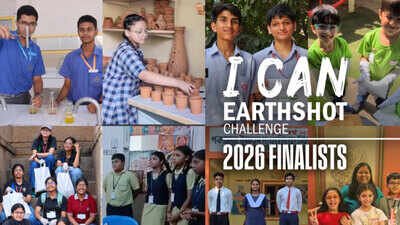
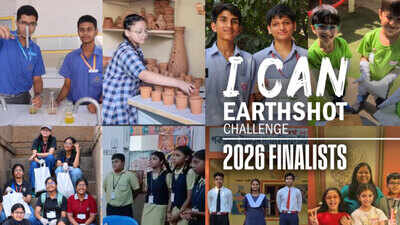
An air filter that works without electricity, a device designed to reduce vehicle emissions around a school and a campaign to prevent waste paper from reaching landfills are among the ideas developed by Indian students shortlisted for a nationwide environmental challenge.The inaugural I CAN Earthshot Challenge has reached close to one million students across more than 15,000 schools in 24 states. Organised by The Earthshot Prize in partnership with Brazilian organisation Alana and global youth movement Design for Change, the initiative invited children aged 9 to 17 to identify environmental problems in their communities and develop practical solutions.The 15 shortlisted teams, representing nine states and Delhi, will travel to Mumbai in November for a two-day programme at the Museum of Solutions. Five category winners will be announced at the Children’s Earthshot Awards Ceremony on November 17, 2026. Each winning team will receive US$2,000 to develop its project further.
Bengaluru students develop an electricity-free air filter
One of the shortlisted projects comes from students at National Public School, Yeshwanthpur, Bengaluru. Their team developed a low-cost air filter designed to work without electricity, using materials including jute, activated biochar, bamboo silica and zeolite.During testing, the students recorded a reduction in AQI readings from approximately 156–160 to 96–98. The figures offer an indication of the prototype’s performance under the conditions in which it was tested; they should not be interpreted as evidence of a comparable reduction in ambient air pollution across an entire neighbourhood.Other student teams have also focused on air quality. A group from Nagpur worked on reducing vehicle pollution around its school, while students in Mumbai developed a manually operated air-filtering device using a bicycle pump and activated carbon.
From river pollution to food waste: Other student projects
The shortlisted ideas extend beyond air pollution. Students have developed initiatives addressing food spoilage, water conservation, waste management and river pollution.Among the examples highlighted by the organisers are biodegradable, oil-free diyas intended to reduce pollution in the Godavari River. Another student-led initiative has collected nearly six tonnes of waste paper for recycling.The projects were developed through Design for Change’s Feel, Imagine, Do and Share framework. Students first identified an environmental challenge in their surroundings, considered possible solutions, built or implemented their ideas and shared the results.The entries were assessed through a two-stage evaluation process involving design professionals, educators, youth advocates and student representatives. The criteria included understanding of local problems, creativity, practical implementation and demonstrated community impact.
What happens next for the 15 finalist teams?
The finalists will present their projects in Mumbai and receive feedback through workshops covering The Earthshot Prize’s five environmental goals: Protect and Restore Nature, Revive Our Oceans, Clean Our Air, Build a Waste-Free World and Fix Our Climate.The programme will culminate in the announcement of five winning teams, with one selected for each category. The US$2,000 grant is intended to help the winners develop their solutions, expand their reach and put them into practice in their communities.The challenge represents the largest youth outreach initiative in The Earthshot Prize’s history. By bringing together children from schools across India, it aims to encourage young people to move beyond learning about environmental problems and take part in addressing them.The finalists’ projects also highlight how local challenges can become starting points for practical experimentation, whether through a simple air filter, a waste-recycling drive or an effort to protect a river.