









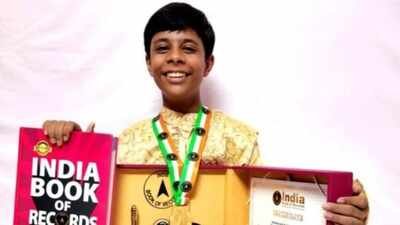
Few musicians, let alone children, would attempt to play dozens of classical ragas in one sitting. Angshuman Sarkar from Nadia, West Bengal, has done it on the santoor, a hammered string instrument of Indian classical music. According to India Book of Records, he set the record for “Maximum Gats of Indian Classical Ragas Played on Santoor by a Child” by performing 60 gat compositions based on 59 ragas in 29 minutes and 32 seconds. The record was confirmed on October 15, 2026.
5 Oct 2026 | 12:06
Parents, when your child refuses to greet relatives, do you make them say hello or respect their choice?
What he played
The India Book of Records page says his performance included the Alap, Sthyai, Antara and Tehai, the main sections of an instrumental composition. In simple terms, the Alap is a slow, free-flowing introduction to a raga, the Sthayi and Antara are the main parts of a fixed composition, and the Tehai is a rhythmic phrase repeated three times to land neatly on the beat. A gat is an instrumental composition set to a rhythmic cycle, so playing 60 of them means switching raga, mood and structure again and again.
A demanding test of memory and skill
Doing this in under half an hour left little time for each piece, roughly half a minute each on average. That kind of pace demands a clear memory of dozens of ragas, steady hands on the santoor’s many strings and precise control of rhythm. India Book of Records says the performance demonstrates exceptional musical proficiency, dedication and passion for Indian classical music.
Why it matters
Achievements like this show how young musicians are keeping classical traditions alive and how much practice sits behind a few minutes on stage. For families and young learners, they are a reminder that mastery of a traditional art form takes patience and years of riyaz, or disciplined practice.